


By: David Sparks
How a Parking Management System and Marketing Can Increase Parking Revenue
A parking management system is software that helps parking operators manage reservations, inventory, pricing, and payments across one or more facilities, using real-time occupancy and customer data to make better decisions.
A modern parking management system gives operators tools to manage reservations, monitor inventory, respond to changing demand, and understand customer behavior. But technology alone doesn’t guarantee that customers will find and book a space. That’s where marketing comes in.
Why Do Parking Operators Struggle to Fill Every Space?
An empty parking space represents more than unused inventory. It represents revenue your business could have earned.
For parking operators, the challenge isn’t always having enough spaces. It’s making sure the spaces are filled and inventory is optimized for revenue. Ensuring that customers can find those spaces, understand their options, and reserve them at the right time is essential to filling spaces. Consider these challenges faced by parking operators of all types of facilities:
- A parking lot may be nearly full during weekday mornings but have plenty of availability in the evenings.
- An airport parking facility may experience a surge in reservations before a holiday weekend.
- A cruise parking operation may see demand fluctuate with sailing schedules.
- Marketing for parking garages may depend heavily on concerts, sporting events, and local business activity sit empty in between
When parking technology and a targeted marketing strategy work together, operators can solve these types of challenges – to reach more potential customers, encourage advance reservations, improve occupancy, and generate more revenue from existing inventory.
Here are the top benefits of pairing your parking management system with marketing for parking: increase online visibility, obtain parking data, market available inventory, utilize dynamic parking pricing, obtain reservations, retain loyal customers, enhance customer experience, measure results, develop synergy between parking technology and marketing.
How Can Marketing Improve Online Visibility for Parking Facilities?
Before drivers can reserve a parking space, they need to know your facility exists.
Today, many customers begin their search for parking online. They compare locations, check prices, read reviews, and look for convenient ways to reserve before leaving home. If your facility doesn’t appear in those searches, potential customers may choose a competitor instead.
That’s why online visibility is an essential part of marketing for parking.
Online Visibility: Direct Booking vs Third-Party Parking Reservation Apps
Many parking operators rely on third-party platforms with parking reservation apps to increase their online visibility. Although aggregators may seem convenient, they also come with trade-offs.
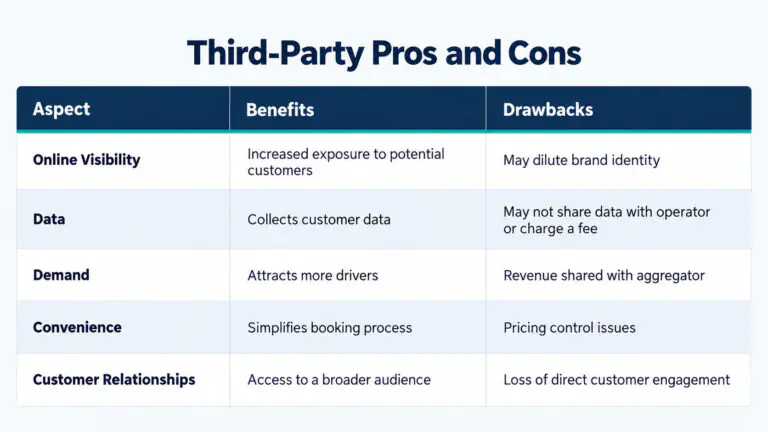
A strategic marketing program gives parking operators another way to reach customers without relying entirely on third-party platforms.
Several basic digital marketing tactics can lift your facility’s online visibility and help to reach people who are actively looking for parking:
- Search engine optimization (SEO): Help your website appear when potential customers search for airport parking, cruise parking, downtown parking, or parking near a specific venue.
- Pay per click (PPC): Drive traffic to your site by running paid ads on which you pay each time someone clicks on the ad.
- Paid search advertising: Reach people searching for parking options in your market and direct them to relevant reservation pages.
- Local listings: Keep your business information accurate and make it easier for customers to find your location, hours, and contact information.
- Social media: Promote special offers, seasonal availability, and parking options for upcoming events.
- Email marketing: Reconnect with previous customers and encourage them to reserve again.
- Business partnerships: Build relationships with hotels, travel businesses, event venues, and other organizations that can refer customers.
Developing a marketing strategy will help your business to identify and bundle the most effective tactics tailored to your market, goals, and parking solution.
Effective marketing isn’t simply about getting more people to visit your website. It’s about reaching the right audience with a message that gives them a reason to book. For example:
- An airport traveler planning a trip several weeks in advance may value competitive pricing and the convenience of reserving a space before departure.
- A customer attending a sold-out concert may care more about location, convenience, and knowing parking is secured before arriving.
Understanding these differences helps parking operators create more relevant campaigns and turn online visibility into reservations.

How Can Parking Data Make Your Marketing Smarter?
One of the biggest advantages of a parking management system is the data it can provide about reservations, occupancy, demand, and customer behavior.
However, collecting data is only the first step. The real value comes from using it to make better decisions.
Consider what your parking data might reveal:
- Which days and times consistently have the most available spaces?
- When does demand increase or decrease?
- How far in advance do customers typically reserve?
- Which promotions or marketing channels generate the most bookings?
- Do certain customer groups return more frequently?
- Which locations or services attract the greatest demand?
The answers can help you identify opportunities that might otherwise go unnoticed.
For example, suppose your facility regularly fills during weekday mornings but has excess capacity on Friday afternoons. Rather than running the same advertising campaign throughout the week, you could test a targeted promotion designed to attract customers during slower periods.
Similarly, if your data shows that many customers book airport parking well before their departure dates, you can focus marketing efforts on reaching travelers while they are still planning their trips.
This approach makes your marketing more strategic. Instead of spending money simply to increase website traffic, you can focus on audiences and time periods that align with your business goals.
Parking data acquired from your parking management solution is most valuable when it is used to help you decide what to do next.
How Can You Market Available Inventory to Increase Parking Revenue?
Parking inventory is different from inventory in many other businesses. Demand can change by the hour, and an unused space during a particular period represents a missed opportunity that cannot be recovered later.
That makes it important to connect marketing with the actual needs of your operation.
A parking management system can help operators understand availability and reservation patterns. Marketing can then help attract customers when and where they are needed.
Marketing for Parking Garages During Events and Slow Periods
For example:
- During slower periods: If certain days or times consistently have lower occupancy, targeted promotions may encourage additional bookings.
- Before major events: Advertising advance reservations can help customers secure parking before arriving, while helping your facility capture event-related demand.
- During seasonal fluctuations: If your facility experiences predictable slow seasons, campaigns can reach audiences who may need parking during those periods.
- For advance reservations: If customers tend to plan ahead, marketing can reach them early enough to influence where they book.
The goal is to move beyond promoting the facility in general and start promoting the availability that matches customer demand.
This doesn’t mean every available space should be discounted. It means understanding your inventory, recognizing opportunities, and selecting marketing strategies that support your revenue goals.
For parking operators, even modest improvements in occupancy can make a meaningful difference when they occur consistently over time.
How Does Dynamic Parking Pricing Work with Marketing?
Parking demand is rarely consistent. Location, season, time of day, special events, and available capacity can all influence what customers are willing to pay.
Dynamic parking pricing helps parking operators respond to changing conditions by adjusting prices according to demand and other business factors. Marketing can complement that strategy by helping customers discover available options and encouraging them to reserve at the right time.
Imagine a parking facility near a major event venue. Demand is expected to increase on Saturday evening, and customers are already searching for parking. Promoting advance reservations can help the facility capture bookings before drivers select another option.
Now consider a quieter Wednesday evening. If the facility has plenty of available spaces, a targeted campaign or limited promotion might encourage additional customers to book during that period.
These approaches serve different purposes, but they can work together.
A parking management solution provides tools and information to help manage inventory and pricing. Marketing helps communicate the available options to potential customers.
The objective isn’t necessarily to fill every space at the same price. It’s to make informed decisions that balance occupancy, demand, and parking revenue.
When marketing campaigns reflect actual availability and pricing strategies, operators can make better use of their inventory while providing customers with relevant choices.
How Does Parking Reservation Software Make Booking Easier?
Getting a potential customer to your website is only part of the process. Once visitors arrive, they need a straightforward way to check availability, understand their options, and complete a reservation.
A confusing or inconvenient booking experience can cause customers to abandon the process and look elsewhere.
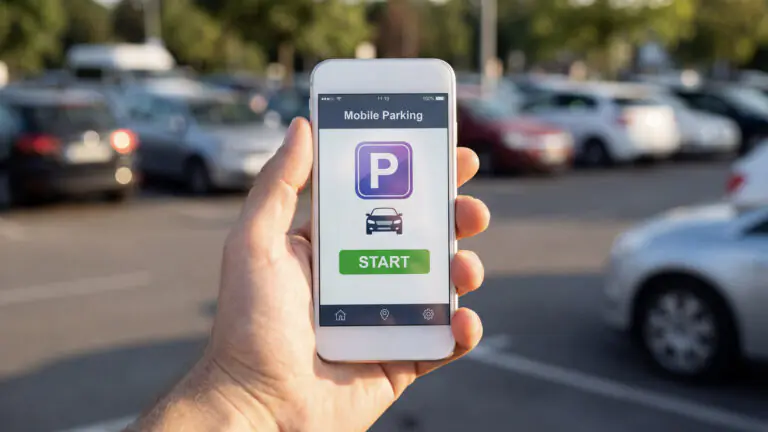
Parking reservation software helps connect customer interest with the ability to book. Depending on the platform and its capabilities, customers may be able to view available options, compare prices, reserve parking in advance, and receive confirmation before arrival.
What Parking Reservation Software Does for Operators
For operators, a streamlined reservation process can support several business objectives:
- Make it easier for customers to complete a booking.
- Encourage advance reservations and improve online visibility into future demand.
- Present pricing and availability clearly.
- Support promotional campaigns that direct customers to specific booking options.
- Help connect marketing activity with reservation behavior.
The reservation experience should also align with the marketing message. If an advertisement promotes convenient advance booking, the customer should be able to complete that booking without unnecessary obstacles.
This is where parking technology and marketing become especially important as a combined strategy. Marketing creates awareness and interest; the reservation platform helps turn that interest into a transaction.
How Can Parking Operators Turn First-Time Customers Into Repeat Customers?
The cost of acquiring new customers can be five to seven times higher than retaining existing ones. While customer acquisition is important to growth, existing customers can also represent a valuable opportunity for profit.
Consider the traveler who parks at your airport facility several times a year, the commuter who needs regular parking, or the cruise passenger who returns to the same port for future sailings.
If customers have a positive experience, they may be more likely to choose your facility again.
Loyalty Programs and Email Marketing for Repeat Parking Customers
Marketing paired with your parking management solution can help encourage that behavior through customer communications, loyalty programs, relevant promotions, and email campaigns. When supported by appropriate customer data and permissions, these efforts can be tailored to different audiences and their parking needs.
For example, previous customers might receive information about advance booking, seasonal promotions, or parking options for an upcoming event. A loyalty program may encourage repeat visits by recognizing returning customers or offering benefits for continued use.
Of course, marketing cannot replace a good customer experience. Customers need a reason to return, including convenient booking, clear instructions, reliable service, and a parking process that meets their expectations.
But when a positive experience is combined with thoughtful communication, a single reservation can become the beginning of a longer customer relationship.
For parking operators, improving customer retention can complement new-customer acquisition and help build a more consistent source of reservations.

Why Does Customer Experience Matter in Marketing for Parking?
Marketing can bring people to your reservation page, but the experience that follows influences whether they complete the booking, return in the future, or recommend your facility to others.
Consider the customer’s journey. Was the booking process easy? Were prices and policies clear? Did the customer receive useful directions and arrival instructions? Was entry straightforward? Could the customer get help if something went wrong?
Every interaction shapes the customer’s impression of your business.
A strong advertising campaign may generate interest, but a frustrating reservation or parking experience can undermine its effectiveness. On the other hand, a smooth experience can build trust and encourage repeat business.
This is why customer experience should be considered alongside parking technology and marketing.
Your website, reservation platform, payment process, entry and exit procedures, and customer communications all contribute to how customers perceive your operation.
When operators evaluate their marketing performance, they should look beyond the initial click or reservation and consider the full customer journey.
Marketing for parking makes the promise. Your parking experience needs to deliver on it.
How Should Parking Operators Measure Marketing Results?
Website traffic, advertising impressions, clicks, and social media engagement can help explain how a campaign is performing. However, these metrics don’t necessarily show whether marketing is contributing to business growth.
For parking operators, the more important question is how marketing affects return on investment (ROI) and revenue.
Marketing Metrics Tied to Parking Revenue:
- Number of reservations generated by a campaign.
- Parking revenue associated with those reservations.
- Occupancy changes during targeted periods.
- Cost to acquire a customer.
- Conversion rate from website visit to completed reservation.
- Repeat bookings and customer retention.
- Return on marketing investment.
Tracking these results can help identify which channels and campaigns deserve further investment.
For example, a campaign that generates substantial website traffic but few bookings may need a different audience, message, or landing page. A smaller campaign that consistently produces profitable reservations may be a better use of the budget.
The results should also be considered in context. A facility’s location, competition, operating costs, pricing, seasonality, and available inventory can all affect performance.
The purpose of measurement is to understand what works for your business, improve what doesn’t, and make better decisions over time.
The goal isn’t simply to spend less on marketing. It’s to understand the parking revenue that marketing creates.
How Do a Parking Management System and Marketing Work Together?
Parking operators invest in technology to improve efficiency, manage reservations, monitor inventory, and deliver better customer experiences. Features such as real-time availability, price management, dynamic pricing, loyalty tools, and integrations with parking access and revenue control systems can support those objectives.
But having these capabilities doesn’t automatically mean customers will discover or use them.
Parking reservation software is more valuable when potential customers can find it and complete a booking. A loyalty program needs customer participation. Available inventory creates an opportunity only when customers know it exists and have a reason to reserve it.
Marketing connects these capabilities with the people who need them.
That is why parking technology and marketing should work toward the same business goals rather than operating as separate functions.
The technology helps manage the operation. Marketing helps attract customers, communicate available options, and generate demand. Together, they can help operators make better use of existing inventory and identify new opportunities to grow parking revenue.
Marketing Support Built for Parking Operators
At Space Genius, we understand that parking facilities have different audiences, operating conditions, and business challenges. Marketing strategies should reflect those differences rather than rely on a one-size-fits-all approach. Our innovative parking solutions are proven methods pairing marketing for parking with technology to boost revenue and customer retention.
Our marketing support for the parking industry is designed around the needs of parking businesses, helping connect digital marketing with the parking technology and services that support their operations.
Explore Space Genius parking reservation software to learn more about the role technology can play in managing reservations and supporting your parking business.
Case Study: Off-Airport Parking
An off-airport parking operator wanted to reduce its reliance on third-party reservation aggregators that were taking a significant share of revenue through commissions.
By implementing a direct online reservation strategy supported by a managed Google Ads campaign with email campaigns, the operator proved the power of pairing parking technology with digital marketing for parking:
- Increased net revenue by 230% in less than a year
- Grew customer database by 130%
Make Every Available Space an Opportunity
Increasing parking revenue doesn’t always require expanding your facility or making a major investment in additional spaces. Sometimes, the opportunity lies in making better use of the inventory you already have.
A parking management system can help you understand demand, manage reservations, and make informed operational decisions. Strategic marketing can help potential customers discover your facility, encourage advance bookings, improve occupancy during slower periods, and bring previous customers back.
The strongest results come when these efforts support one another.
By combining parking data, parking reservation software, targeted marketing, and a focus on customer experience, parking operators can make more informed decisions about how to attract demand and generate revenue.
Every facility is different, and results depend on the market, competition, available inventory, and execution. But one principle remains the same: an empty space is an opportunity that deserves attention.
With the right parking technology and marketing strategy working together, you can do more than manage parking. You can make your existing inventory work harder for your business.
Parking Management System FAQs
1. How can a parking management system increase parking revenue?
A parking management system helps operators manage reservations, monitor available inventory, analyze demand, and implement pricing strategies. When paired with targeted marketing, it can help attract more customers, improve occupancy, and generate additional parking revenue from existing spaces.
2. How can marketing for parking helpoperators increase direct bookings?
Marketing strategies such as search engine optimization (SEO), paid advertising, local listings, and email campaigns can direct customers to a parking operator’s own website. Combined with convenient parking reservation software, these efforts can increase direct bookings, strengthen brand recognition, and reduce reliance on third-party platforms.
3. What role do parking aggregators play in a parking operation?
Parking aggregators connect drivers with available parking options and can help operators reach new customers. However, relying too heavily on third-party platforms may limit direct customer relationships and involve additional booking fees. A strong marketing strategy and an easy-to-use direct reservation system can help operators balance aggregator bookings with their own sales channels.
4. How do parking technology and marketing work together?
Parking technology helps operators manage reservations, inventory, pricing, and customer information, while marketing for parking attracts potential customers and encourages bookings. Together, they help parking operators promote available spaces, respond to changing demand, encourage repeat business, and measure which campaigns contribute to revenue growth.
5. How can parking operators measure the return on their marketing for parking investment?
Operators can evaluate marketing performance by tracking reservations, parking revenue, occupancy rates, booking conversion rates, customer acquisition costs, and repeat bookings.